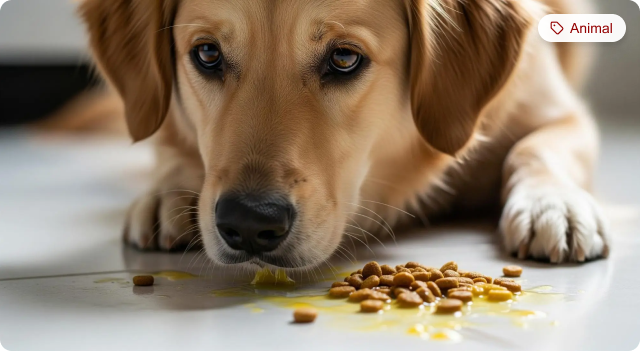
1. Regurgitation vs. Vomiting
Knowing which one is happening tells you where the problem is located.
-
Regurgitation (The “Ouch” or “Oops”): This happens quickly. The dog lowers its head, and food comes out effortlessly without much abdominal heaving. The food is usually cylindrical and looks completely undigested. This usually indicates an issue with the esophagus.
-
Vomiting (The “Ugh”): This is an active process. You’ll hear the “hic-hic-hic” sound, see their stomach muscles pumping, and the food may be partially slimy or covered in yellow bile. This indicates an issue with the stomach.
2. Common Reasons for Undigested Food
The “Scarf and Barf” (Eating Too Fast)
This is the #1 cause. When a dog inhales their food without chewing, it hits the stomach too quickly, or they swallow too much air. The stomach’s “rejection reflex” kicks in, and the food comes right back up.
-
The Fix: Use a slow-feeder bowl or put a large, clean rock in the middle of their dish to force them to eat around it.
Food Intolerance or Allergies
If your dog’s digestive system is sensitive to a specific protein or filler (like corn or soy), the stomach may simply refuse to process it. This often happens shortly after eating a new brand of food.
Mealtime Stress
If a dog feels they have to “protect” their food from other pets, or if they are highly excited/anxious during feeding, their parasympathetic nervous system (which handles digestion) shuts down, leading to immediate rejection of the meal.
Physical Obstructions
If your dog has swallowed a piece of a toy, a rock, or a sock, the food physically cannot pass into the small intestine. It sits in the stomach until it is eventually forced back up.
Warning: If your dog is also lethargic or unable to keep water down, see a vet immediately.
Megaesophagus
This is a condition where the esophagus loses its muscle tone and becomes a “pouch” rather than a tube. Food gets stuck in the throat before it ever reaches the stomach, leading to effortless regurgitation.