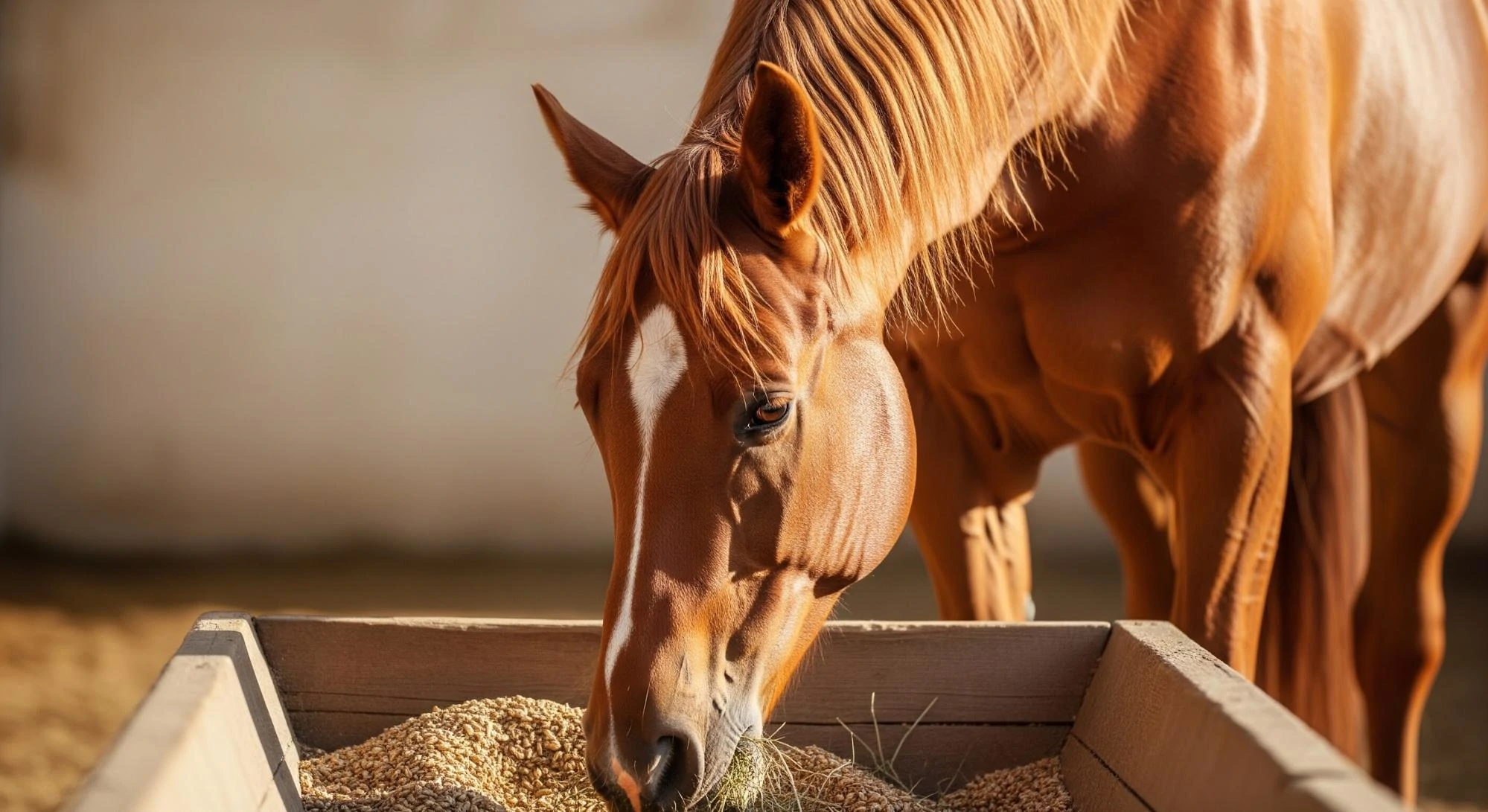
Ever looked at your horse and wondered if that “roundness” is healthy muscle or a few too many flakes of alfalfa? While we all love a “shiny” horse, there is a fine line between well-covered and overweight.
Because horses come in all shapes and sizes—from petite Arabians to massive Shires—looking at a number on a scale isn’t always helpful. Instead, horse owners use Body Condition Scoring (BCS).
Here is how to master the art of the Henneke Scale to ensure your partner is in peak physical form.
What is the Henneke Scale?
Developed in the 1980s, the Henneke Scale is a standardized scoring system ranging from 1 to 9. It measures fat cover in specific areas of the horse’s body.
-
1–3 (Underweight): Ribs and hip bones are prominent; the horse lacks muscle and fat cover.
-
4–6 (Ideal): This is the “sweet spot.” For most disciplines, a 5 is the goal—ribs aren’t visible but can be easily felt.
-
7–9 (Overweight): The horse has heavy fat deposits, a “cresty” neck, and may have a gutter running down its spine.
The 6 Critical Checkpoints
You cannot score a horse accurately from the fence line. You have to get your hands on them! Winter coats and “hay bellies” (bloat) can be very deceptive. To get a true score, palpate these six areas:
-
The Neck: Feel for a “crest.” A hard, thickened neck is a red flag for metabolic issues.
-
The Withers: On a lean horse, these are prominent. On an obese horse, they are bulging with fat.
-
Behind the Shoulder: This area should blend smoothly. If there is a “cushion” of fat behind the elbow, the score is rising.
-
The Ribs: This is the most telling area. You should be able to feel the ribs with light pressure, but not see them.
-
The Loin (Back): Is the back flat, or is there a “crease” where the spine sits in a valley of fat?
-
The Tailhead: Feel for soft fat around the dock of the tail.