Making your pig food is also a great project that will help maintain high nutrition of your animals and also save you money in the long term. Whether you are rearing pigs as a commercial enterprise or keeping a few pigs, you need to know how to compose and prepare proper pig feed in order to guarantee the well-being of pigs, their growth and productivity.
Understanding Pig Nutritional Requirements
It is important to know what pigs nutritionally require before you begin to combine the ingredients into your pig feed recipe with corn. Pigs need a balanced diet that includes proteins, carbohydrates, fats, vitamins and minerals. Different nutritional requirements are specific to the age, weight of the pig and its purpose.
Pigs that are growing require more protein as compared to those that are mature and even breeding sows have other needs other than those of pigs that are raised as meat producers.
Protein is particularly important for pig development and muscle growth:
- Young pigs require 16-18% crude protein in their diet
- Finishing pigs can thrive on 14-16% protein
- Adult pigs can do well on 12-14% protein
Also, pigs should receive adequate calcium and phosphorus in their proportions, usually 1:1, which is beneficial to the formation of the bones and health. It is on these requirements that the development of a balanced ration of pigs that enhances optimal health is based.
Key Ingredients for Homemade Pig Feed
The foundation of good pig feed relies on selecting quality ingredients that provide the necessary nutrients.
Grain and Energy Sources
Corn is the most widespread type of grain fed to pigs, it is a source of energy and carbohydrates. It is of particular concern when developing a good pig feed formula consisting of corn that has predictable outcomes. Others are barley, oats, wheat and sorghum. These grains are supposed to constitute 50-70% of your pig mixture of balanced ration.
Protein Sources
Increase the protein content by using such ingredients as soybean meal, fishmeal, meat and bone meal, or other supplements containing the protein. They are able to deliver 15-25% of your feed mixture and are essential to satisfy the protein needs of your balanced pig ration.
Minerals and Vitamins
Caustic is supplied by limestone or oyster shells, whereas vital minerals are supplied by salt, iodized salt, or mineral blends. Pigs should be fed vitamin premixes that are specifically formulated to be given to them at a rate of 0.5-1 percent of the total feed as per package directions.
Other Additives
You can also add wheat bran, barley meal or any other byproduct of the grain. Others use probiotics or enzymes to enhance productivity and gastrointestinal tract digestion.
 Key Fact: According to agricultural research, properly formulated homemade pig feed can reduce feed costs by 20-35% compared to commercial feeds while maintaining similar growth rates and health outcomes.
Basic Pig Feed Formulation Guide
Let’s look at a practical example for formulating feed for growing pigs (25-75 kg). This pig feed recipe with corn serves as an excellent balanced ration for pigs at this growth stage:
| Ingredient | Percentage | Purpose |
| Corn (ground) | 55% | Energy source, carbohydrates |
| Soybean Meal | 18% | Protein content |
| Wheat Bran | 12% | Fiber, nutrition |
| Fishmeal | 8% | Additional protein, amino acids |
| Limestone | 4% | Calcium for bone development |
| Salt (iodized) | 0.5% | Essential minerals, iodine |
| Vitamin Premix | 1% | Essential vitamins A, D, E |
| Mineral Premix | 1.5% | Trace minerals like zinc, iron, copper |
The calculated ration in this formulation has a proportion of about 15% crude protein and 3, 200 kcal/kg of metabolizable energy that qualifies it as a perfect balanced diet of pigs during the growing period. The corn-based formulation will be used to guarantee the presence of energy whilst other ingredients will contain vital nutrients.
Step-by-Step Process for Making Pig Feeds
Step 1: Gather Your Ingredients and Equipment
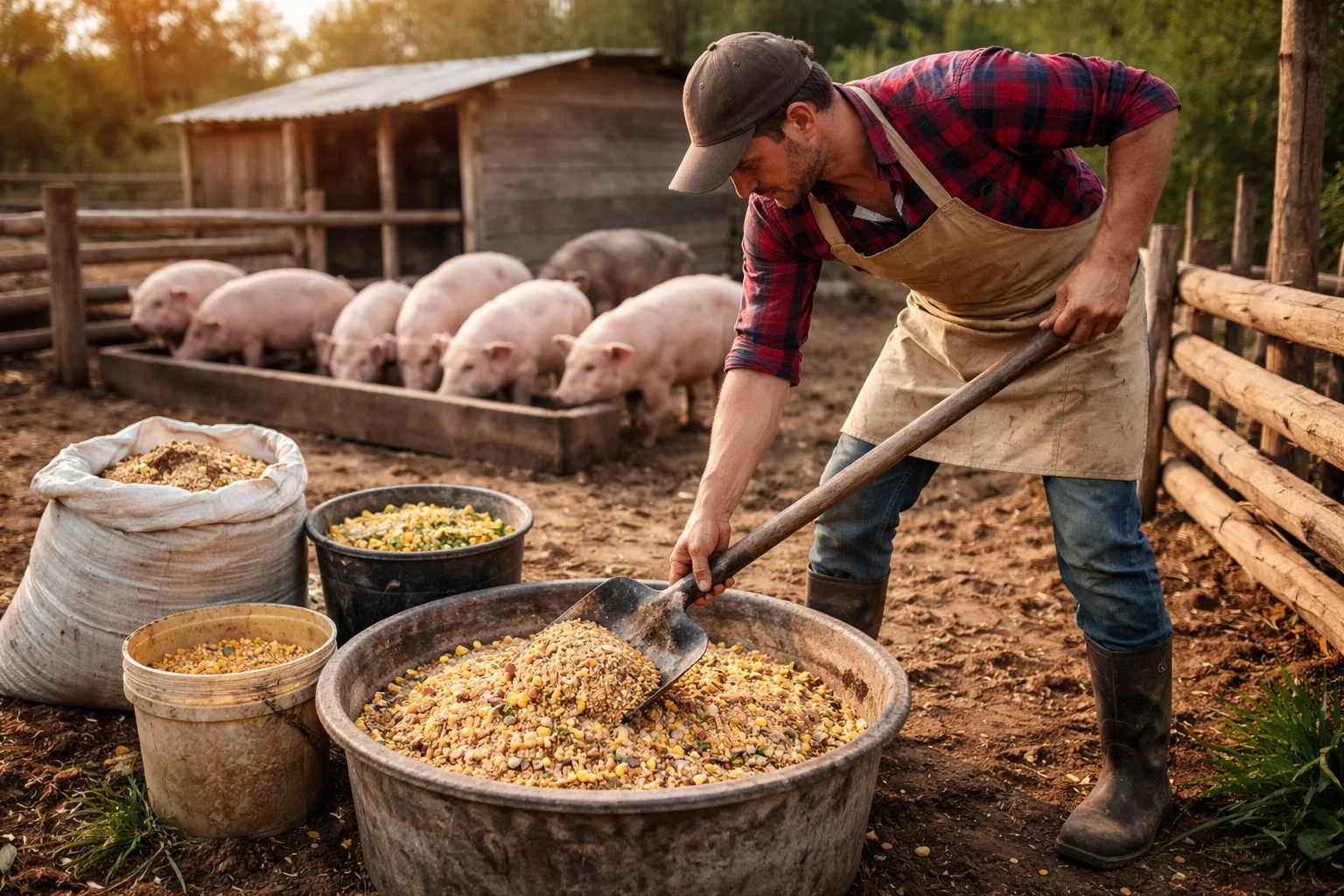
Before you begin making pig feeds, assemble all ingredients and necessary equipment. You’ll need:
- A large mixing container or feed mixer
- Measuring scales (preferably digital for accuracy)
- Shovels
- Containers for storage
Having everything ready ensures an efficient and organized process.
Step 2: Prepare and Grind Your Grains

One should grind grains to the right particle size. It can lead to digestive system problems because the grind is too fine, and the too coarse particles are not effectively consumed. Most pigs do well with a medium grind (the consistency of wheat flour). You have to make sure that your pig feed meal is made using corn and the corn should be properly ground. In the absence of grinding equipment, buy already ground grains at feed stores.
Step 3: Measure All Ingredients Accurately
Accuracy is paramount in the development of feed. Measure each ingredient on a scale to your formulation. Any minor changes can influence the end nutrient profile. As an example, build a feed following your pig feed recipe with corn, measure specifically 55 kg of corn, 18 kg soybean meal and so on.
Step 4: Mix Thoroughly
Add all ingredients in a mixer. The biggest quantity ingredient (usually corn) should be added first, and then smaller portions should be added progressively. Blend at least 10-15 minutes to make sure it is evenly spread. The lack of uniform mixture may lead to the situation where certain pigs are over-fed on some nutrients whereas others over-feed on others. When it is a mechanical mixer then run it as long as the manufacturer suggests.
Step 5: Add Supplements Last
Although it is always important to mix the basic ingredients thoroughly, the vitamin and mineral premixes should always be added at the end. They are required in low amounts and they are more evenly spread when they have been added to an already-mixed base. Another 5 minutes of stirring following addition of supplements is necessary so that your balanced pig ratio is complete and consistent.
Step 6: Store Properly
Pour your completed feed into non-leaked containers and with tight lids. Keep in a cool and dry place free of moisture and direct sunlight. Moisture will result in the growth of molds, which are harmful to pigs. When stored appropriately, your feed will store nutritionally and safely over several weeks.
Different Formulations for Different Pig Stages
Pigs have different nutritional needs at various life stages. Creating a balanced ration for pigs requires understanding these variations. Here’s a helpful reference guide:
| Pig Stage | Crude Protein % | Crude Fiber % | Best Use |
| Piglets (weaned) | 18-20% | 3-4% | Supporting rapid growth and immunity |
| Growing Pigs (25-75 kg) | 15-16% | 4-5% | General growth and muscle development |
| Finishing Pigs (75-110 kg) | 14-15% | 4-5% | Final weight gain before market |
| Breeding Sows | 13-14% | 5-6% | Maintenance and reproductive health |
| Boars | 12-13% | 5-6% | Maintenance and breeding fitness |
Each stage requires adjusting your pig feed recipe with corn and other ingredients to maintain proper nutritional balance.
The Importance of a Balanced Ration for Pigs
The process of making the meal of pigs is more than just a combination of ingredients. It involves the knowledge of nutrient interrelation. The optimal ratios of energy, protein, vitamins and minerals that combine to promote the growth and health of pigs ought to be given by a balanced ratio. In formulating your particular pig feed formula consisting of corn, make sure that all the factors interact and not in individually isolating situations.
A good balanced diet of pigs does not only take into account the percentage of each nutrient but also the bioavailability of the nutrient. As an example, protein quality is equally important as quantity is. The pig food formula with corn must have good sources of protein that contain essential amino acids in the appropriate ratios.
Common Mistakes to Avoid
Using Poor Quality Ingredients

Never buy low quality grains and sources of proteins. Pigs can get sick and fail to grow well because of the molded or contaminated ingredients. In using corn as a part of your pig feed recipe with corn, make sure that it is clean and well stored.
Ignoring Amino Acid Balance
Although the percentage of protein is important, the amino acid profile is also important. Make sure that your protein sources are sufficient in lysine, methionine and threonine. This is important in formulating a balanced ration in pigs.
Incorrect Calcium-to-Phosphorus Ratio
An imbalanced ratio can lead to skeletal problems and reduced growth rates. Aim for approximately 1:1 to 1.2:1 calcium to phosphorus in your balanced ration for pigs.
Insufficient Mixing
Poor mixing results in inconsistent nutrition across batches and can cause some pigs to thrive while others underperform. When making pig feeds, ensure thorough mixing to maintain consistency.
Neglecting Storage Conditions
Improperly stored feed loses nutritional value quickly and becomes susceptible to mold contamination.
Introducing Homemade Feed to Your Pigs
If you’re switching from commercial feed to a homemade pig feed recipe with corn and other custom ingredients, do it gradually:
- Week 1: Mix 25% homemade feed with 75% current feed
- Week 2: Increase to 50-50 mixture
- Week 3: Use 75% homemade with 25% commercial feed
- Week 4: Complete the transition to 100% homemade feed
This gradual approach prevents digestive upset and allows pigs to adjust to your new balanced ration for pigs.
 Research Note: Studies show that pigs transitioning too quickly to new feed formulations experience 5-10% reduced feed intake and growth rates during the adjustment period, highlighting the importance of gradual transitions when implementing a new pig feed recipe with corn.
Monitoring Your Pigs’ Response
After implementing your homemade feed program, monitor your pigs closely. Healthy pigs should show:
- Consistent weight gain
- Shiny coats
- Clear eyes
- Active behavior
Note feed consumed, weight gain and health problems. When the pigs seem to be not performing well in the current pig feed recipe using corn, you might have to change the balanced ratio of pigs. Some typical modifications are the addition of protein content, additional mineral premix or grain sources.
Advanced Strategies for Optimizing Your Pig Feed Recipe with Corn
Once you’ve mastered basic feed formulation, consider these advanced strategies:
Enzymes: Adding enzymes to your pig feed recipe with corn can improve nutrient digestibility and overall feed efficiency.
Probiotics: These support gut health and can reduce disease incidence.
Specialty Ingredients: Creating a balanced ration for pigs that includes small amounts of specialty ingredients like fish oil can provide omega-3 fatty acids that improve coat quality and immune function.
Record-Keeping: This is essential when developing your pig feed recipe with corn. Track which ingredients you use, their sources, and how your pigs respond. This data helps you continuously refine your balanced ration for pigs over time.
Ready-Made Feed Options
In case you think that it is too time consuming to prepare pig feeds, or rather you simply want the convenience of commercially prepared feeds, there are real good alternatives. Midsouth Feed Distributor sells various professionally developed pig feeds that have various life stages and production objectives.
Midsouth Feed Distributor offers nutritionally balanced feeds that are of high quality and have been scientifically prepared to satisfy all the nutritional needs of your pigs. Their products are convenient, consistent with years of experience in the field of animal nutrition. They will have products to suit you whether you require feed to black, weaners, growing, finishing or breeding equipment.
Their professionally composed feeds remove all the guessing around and guarantee your pigs the best nutrition to help them grow, be healthy and produce as well. Instead, when you choose to go the practical method of making your own pig feed formula using corn, the information given in this article gives all you need to succeed.
Conclusion
Production of pig feeds is quite possible and even cost effective in case done properly. With the knowledge of the nutritional needs of your pigs, a choice of good ingredients, appropriate formulation and blending practices, you are able to create feeding that would enhance good growth and health. It is important to note that regardless of whether you make your own pig feed recipe using corn or take advantage of the professionally prepared alternatives, it is important to make sure that your pigs are fed on a balanced pigs ration that addresses their needs in relation to their particular life stage.
Begin with established formulations, continue to test the advancement of your pigs, and modify them according to their achievements. Careful preparation and practice, even homemade pig feed can be as effective as commercial feed in addition to being very cost-efficient and giving you more control over what your animals are eating. The key to a successful operation is to develop a balanced composition of pigs that takes all nutritional aspects into account and you will have healthy and productive pigs.
FAQs
1. What nutrients are essential when making pig feeds at home?
Pigs require a balanced combination of protein, carbohydrates, fats, vitamins, and minerals for proper growth and health. Protein levels vary by age, with young pigs needing higher percentages than mature pigs. Proper calcium and phosphorus ratios are also important to support strong bones and overall development.
2. How much protein should homemade pig feed contain?
Protein levels depend on the pig’s growth stage, ranging from 18–20% for piglets to 12–14% for adult pigs. Growing pigs typically need around 15–16% crude protein for muscle development. Adjusting protein levels correctly ensures healthy weight gain and efficient feed conversion when creating your pig feed recipe with corn.
3. What are the best grain sources for pig feed formulation?
Corn is the most commonly used grain because it provides high energy and carbohydrates. Other good options include barley, wheat, oats, and sorghum depending on availability. Grains usually make up 50–70% of the total homemade pig feed mixture, making corn a cornerstone of most pig feed recipes.
4. Why is proper mixing important in homemade pig feed?
Thorough mixing ensures that all nutrients are evenly distributed throughout the feed batch. Poor mixing can result in some pigs getting too many supplements while others receive too little. Consistent mixing helps maintain uniform growth and health among all pigs and is essential when making pig feeds.
5. How should homemade pig feed be stored?
Homemade pig feed should be stored in clean, dry containers with tightly sealed lids. Keep it in a cool, moisture-free environment to prevent mold growth and nutrient loss. Proper storage helps maintain feed quality and safety for several weeks.
6. How do I create a balanced ration for pigs at different life stages?
Creating a balanced ration for pigs requires adjusting protein, fiber, and mineral content based on the pig’s age and purpose. Consult the formulation guide provided in this article for specific percentages. A balanced ration for pigs ensures optimal growth and health throughout the animal’s life.
7. Can I use the same pig feed recipe with corn for all my pigs?
No, different life stages require different nutrient levels. Your pig feed recipe with corn for piglets should contain higher protein than a recipe for finishing pigs. Always adjust your formulation based on your pigs’ specific growth stage to maintain proper nutritional balance and a balanced ration for pigs.